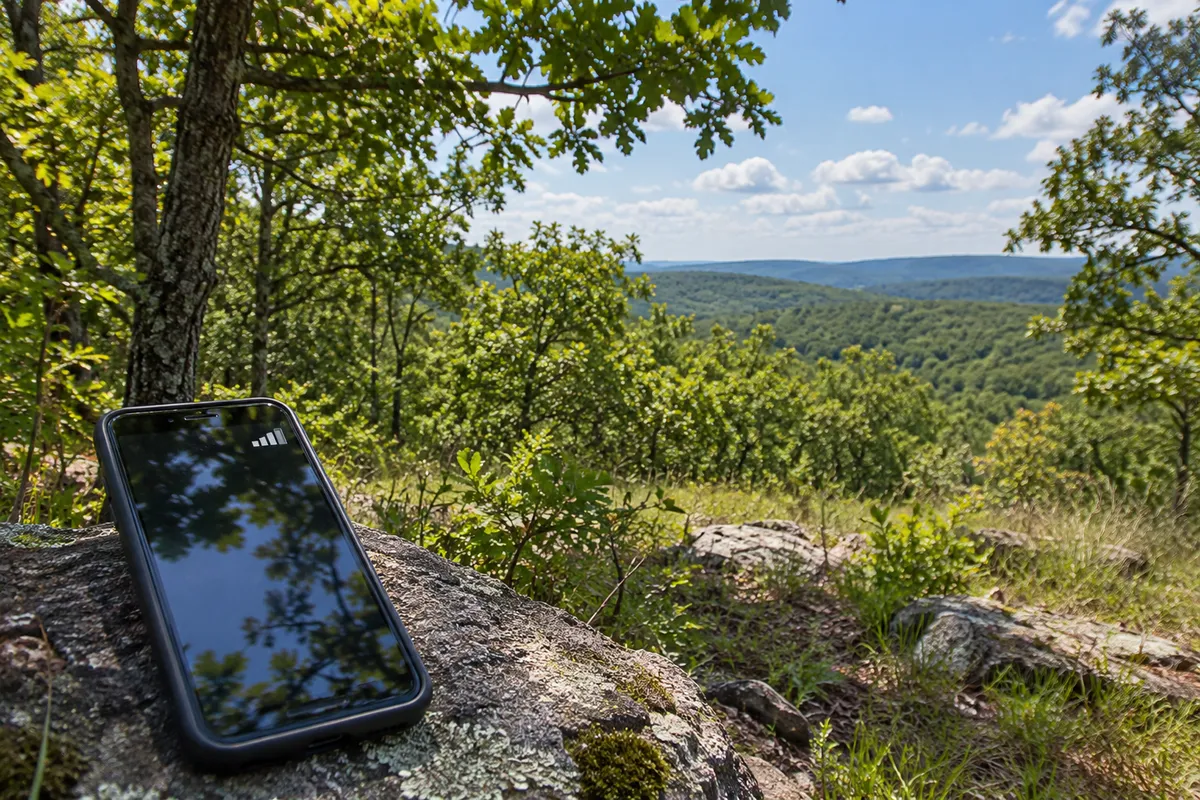
Cell Service and Internet on Rural Land: What to Check Before You Buy
A rural property can look like the perfect getaway on a map. The road appears accessible, the views are appealing, and a cell carrier's coverage map seems to show service. But if you plan to work remotely, navigate with your phone, stay in touch with family, or use connected security equipment, you need more than a colored coverage area. You need to know what works at the actual parcel.
Internet and cell service are part of property fit. Neither should be assumed from a nearby town, a neighbor's connection, or an online map. The practical approach is to gather preliminary information, ask providers specific questions, and test conditions on site whenever possible.
Why a coverage map is only a starting point
The FCC's National Broadband Map displays fixed internet availability reported by providers and modeled mobile coverage. The FCC explains that mobile coverage predictions generally describe outdoor or in-vehicle conditions, not reliable indoor service. Actual results can differ because of terrain, devices, network capacity, and other conditions. See the FCC's explanation of the map.
That distinction matters in the Ozarks. A wooded slope, valley, ridge, or stand of trees can affect reception even when a map shows coverage across the general area. A connection that works along the main road might perform differently near the intended campsite or building area. A strong-looking signal icon also does not tell you whether calls stay connected or data uploads work consistently.
For fixed broadband, the map lists providers and advertised service types at mapped locations. It does not prove a provider will install service on a vacant parcel on your preferred timeline or at an acceptable price. A parcel without a conventional service address may require additional research. Treat map results as leads to investigate, not a promise.
Start with the exact location
Gather the parcel number, county, GPS coordinates, road name, and any assigned street address. Keep a copy of the parcel map. If the property has no street address, tell each provider that up front. Ask whether it can evaluate eligibility using coordinates, a nearby serviceable address, or a site survey. Do not use a neighbor's address to assume the parcel itself qualifies.
Open the FCC National Broadband Map and inspect the property area. Review both fixed broadband and mobile coverage. Note which providers and technologies appear, then compare that information with each provider's own eligibility tool. Keep screenshots with the date checked because availability can change.
If the parcel is not shown as a broadband-serviceable location, that does not automatically mean every internet option is impossible. Vacant land may not appear in the fixed-location dataset in the same way as a developed home. Contact providers directly and ask how they assess an undeveloped site.
Test cellular service on the ground
When possible, visit the property with a charged phone and another carrier's device. Test at the entrance, along accessible portions of the parcel, and where you realistically expect to spend time. Follow safe access practices and stay within areas you are permitted to enter.
Make a regular voice call, send a text, load a webpage, and try a short video call or upload if that matters to your plans. Record the carrier, device, location, time, weather, and observed performance. Repeat tests at different times if reliable service is essential. One successful test is useful evidence, not a guarantee of future performance.
Be careful about Wi-Fi calling during a test: it may make a call succeed through an existing internet connection rather than the cellular network you intend to evaluate. If safe and appropriate, confirm whether the phone is using cellular data. Also distinguish emergency calling capability from dependable everyday voice and internet service.
Ask neighbors about their experience, but remember that their equipment, carrier, elevation, and building location may differ. A neighbor's strong reception is a clue, not verification for your lot.
Compare the realistic internet options
Fiber, cable, and DSL
Wired service may offer useful performance where infrastructure exists, but proximity to a line is not the same as installation eligibility. Ask whether the provider serves the exact parcel, whether an address must be assigned first, whether poles or trenching are required, and whether construction charges apply. Get any estimate and limitations in writing before depending on that option.
Fixed wireless
Fixed wireless typically uses an installed receiver communicating with a provider's network. Availability may depend on tower location, terrain, obstructions, and mounting height. Ask whether a site survey is required, whether trees or hills affect line of sight, and who pays for equipment, mounting, and installation. Confirm expected speeds and whether the provider can serve undeveloped land.
Mobile hotspot or cellular home internet
A hotspot may be convenient for occasional visits, while cellular home internet can be an option in some areas. Both depend on carrier policies and practical network conditions. Verify that the specific plan is available for the intended location and use. Check data allowances, deprioritization or congestion policies, device requirements, power needs, and whether service can be used away from a registered address. Do not assume that a phone signal guarantees eligibility for a home-internet plan.
Satellite internet
Satellite can be worth investigating where wired or terrestrial wireless service is limited. But availability and performance still depend on the provider, plan, equipment, and installation conditions. Ask about an unobstructed sky view, tree clearance, mounting options, electricity, equipment costs, and whether the service address or service area is eligible. A wooded parcel may require an on-site obstruction assessment. Never assume that purchasing a satellite kit guarantees useful connectivity at every spot on the property.
Owner-financing reminder: If you're purchasing land through owner financing, review your purchase agreement before installing internet equipment, clearing trees, trenching, or making other property improvements. Some agreements restrict improvements until the property is paid off or require prior written permission. Confirm what your agreement allows before making changes.
Questions to ask before relying on a provider quote
Use the same questions with each provider so you can compare answers fairly:
Can you confirm service for this exact parcel or coordinates, even if it has no assigned street address?
Is a site survey needed, and is it free or paid?
What speeds are offered for purchase, and are there data limits or performance restrictions?
What equipment, electricity, clear sky, tower visibility, poles, trenching, or other improvements are required?
What are the installation fee, monthly charge, equipment cost, taxes, and potential nonstandard construction charges?
What timeline is realistic, and what could prevent installation?
Can you provide the eligibility determination and cost estimate in writing?
If a representative says service is available, clarify whether that means a preliminary database match, a confirmed orderable plan, or an installation approved after a site survey. Those are different levels of certainty.
Match connectivity to how you intend to use the land
A buyer who visits a parcel occasionally may have different needs from someone planning frequent remote work. For an occasional recreational visit, you may be comfortable with limited service if you prepare offline maps and emergency communication plans. For video meetings, cloud-based work, or connected monitoring, consistency, upload capacity, and power availability become more important.
Do not make connectivity the only property-fit test. Access rights, road conditions, permitted uses, utilities, terrain, and local restrictions still matter. A parcel can have good cell service and still be unsuitable for a buyer's intended use. Likewise, limited connectivity does not necessarily make land a poor fit for someone who wants a quiet, unplugged retreat.
If internet access is essential, consider making verified service feasibility part of your pre-purchase decision process. A provider's written site assessment is stronger than a casual verbal assurance, though future performance can never be guaranteed.
What if the FCC map appears incorrect?
The FCC allows consumers to submit certain availability challenges when reported fixed service cannot actually be ordered or installed under the reported conditions. Its guidance distinguishes availability from network performance and affordability. See the FCC availability challenge instructions. Mobile coverage challenges use qualifying on-the-ground test evidence through the FCC's process.
A challenge can help improve public data, but it is not a substitute for resolving your immediate property decision. Keep records of provider responses, quotes, screenshots, and any test results.
A practical pre-purchase connectivity checklist
Record the exact parcel ID, county, road, and coordinates.
Check the FCC fixed broadband and mobile maps; note the date.
Check individual carrier and internet-provider tools.
Ask providers to confirm eligibility for vacant land in writing.
Request installation requirements, timing, and total costs.
Test cellular calling and data at the property, if access is permitted.
Assess trees, terrain, power, and possible equipment locations.
Decide whether the verified options meet your actual needs.
Frequently asked questions
Will a carrier coverage map guarantee a signal?
No. Coverage maps are estimates, and the FCC's modeled mobile coverage does not establish dependable indoor reception. Terrain, trees, equipment, and network conditions can change the experience. Test at the parcel when practical.
Can I get internet on vacant land without a street address?
Possibly, depending on the provider and technology. Some providers can review coordinates or conduct a site survey; others may require an assigned address or additional infrastructure. Ask the provider to evaluate the exact parcel rather than assuming that a nearby address qualifies.
What should I verify before assuming satellite internet will work?
Confirm service-area eligibility, equipment and subscription costs, power needs, mounting requirements, and whether trees or terrain obstruct the required sky view. A site-specific assessment is especially important on wooded property.
Make the decision with better information
Reliable connectivity can make rural land more practical, but it should be verified rather than inferred. A few careful questions and an on-site test may prevent expensive surprises. If you're comparing properties, document what is known, what is still uncertain, and which answers must be confirmed before you buy.