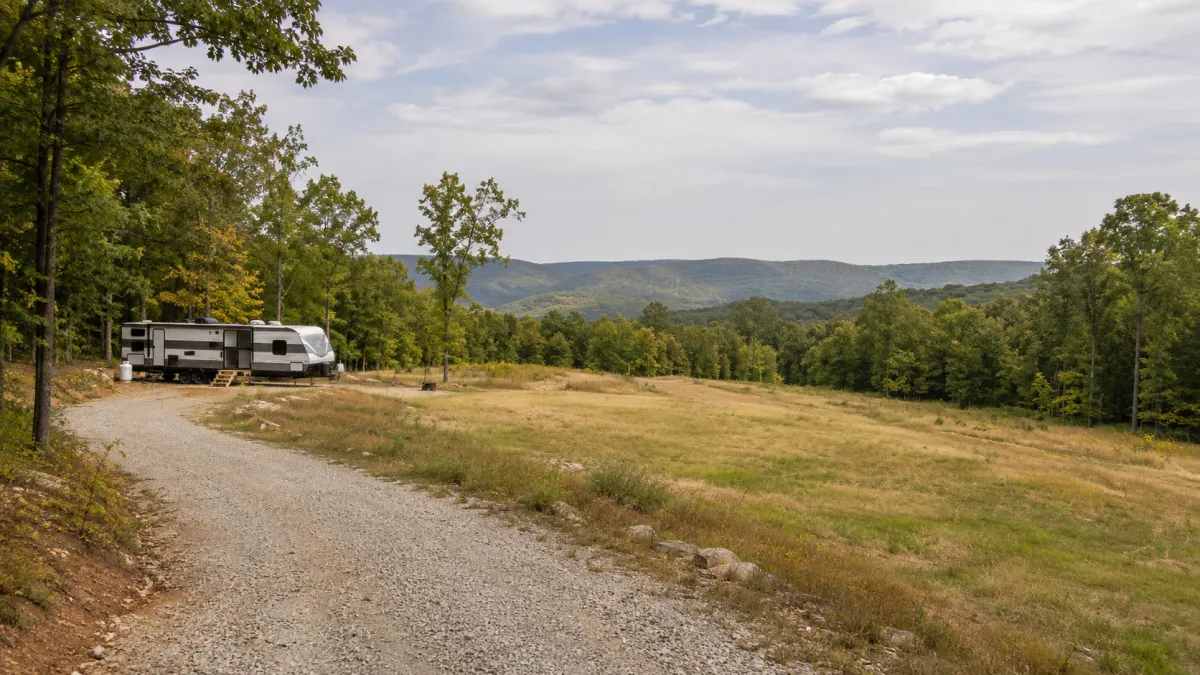
Can You Camp, Build, or Park an RV on Rural Land? Here’s What to Check
A piece of rural land can feel like freedom.
You may picture setting up a tent for the weekend, parking an RV near the trees, building a small cabin, or creating a future homesite away from the noise.
Then comes the common assumption:
“Once I own the land, I can use it however I want.”
Unfortunately, owning rural land does not always mean every use is allowed. County or city rules, subdivision restrictions, property owners’ association requirements, sanitation regulations, road conditions, and even the terms of a financing agreement can affect what you can do with a particular property.
That does not mean rural land is too complicated to buy. It simply means you should verify the details before making plans.
Owning Land Does Not Always Mean Unlimited Use
A deed gives you ownership of the property, but that ownership may still be subject to public rules and private restrictions.
The answer to “Can I use this land?” also depends on what you mean by use.
These are separate questions:
Can I camp in a tent for a few weekends each year?
Can I park an RV on the property?
Can I stay overnight in the RV?
Can I live in the RV full-time?
Can I place a manufactured or mobile home there?
Can I build a small cabin?
Can I build a full-time residence?
Can I install a shed, driveway, well, or septic system?
Permission for one activity does not automatically mean the others are allowed.
For example, a property may allow an RV to be stored there but not occupied. Another area may allow temporary camping but limit how many consecutive days you can stay. A subdivision may allow a home but require a certain minimum size or building type.
The more specific your question is, the more useful the answer will be.
Start With Your Exact Plan for the Property
Before contacting a seller, county office, city, or property owners’ association, define what you hope to do with the land.
Instead of asking:
Can I camp there?
Ask:
Can I stay in a tent on the property for two or three weekends each month?
Instead of asking:
Are RVs allowed?
Ask:
Can I park and occupy my RV on the property before building a permanent home?
Instead of asking:
Is the land buildable?
Ask:
Are small cabins permitted, and are there minimum size, foundation, setback, or utility requirements?
Your intended use should include:
What you plan to place on the land
Whether the use will be temporary or permanent
How frequently you plan to stay there
Whether you will need water, electricity, or wastewater service
Whether you plan to build now or several years later
Whether the property will be recreational, residential, or investment land
A clear plan makes it easier to identify which rules matter.
Check County or City Rules First
Arkansas land rules are not one-size-fits-all.
A property inside city limits may be handled differently from one in an unincorporated county area. Different counties and municipalities may also have different planning, permitting, temporary-use, floodplain, driveway, and development requirements.
The Arkansas Department of Labor and Licensing states that the Arkansas Building Code applies statewide, including rural and unincorporated areas. The local office responsible for planning, permitting, or inspections may still vary by location. For example, some Arkansas counties have dedicated planning and building-safety departments that handle different parts of the development process.
When contacting the appropriate local office, ask:
Is temporary camping allowed on this parcel?
Are there limits on the number of days?
Can an RV be parked on the property?
Can the RV be occupied?
Is a temporary-use permit required?
Is RV use allowed only during construction?
What types of homes or cabins are permitted?
Are building permits required?
Are there setback or minimum-size requirements?
Are there floodplain or driveway permits to consider?
Provide the parcel number, legal description, and property location whenever possible. A general answer about the county may not apply to every parcel.
Review Subdivision and POA Restrictions
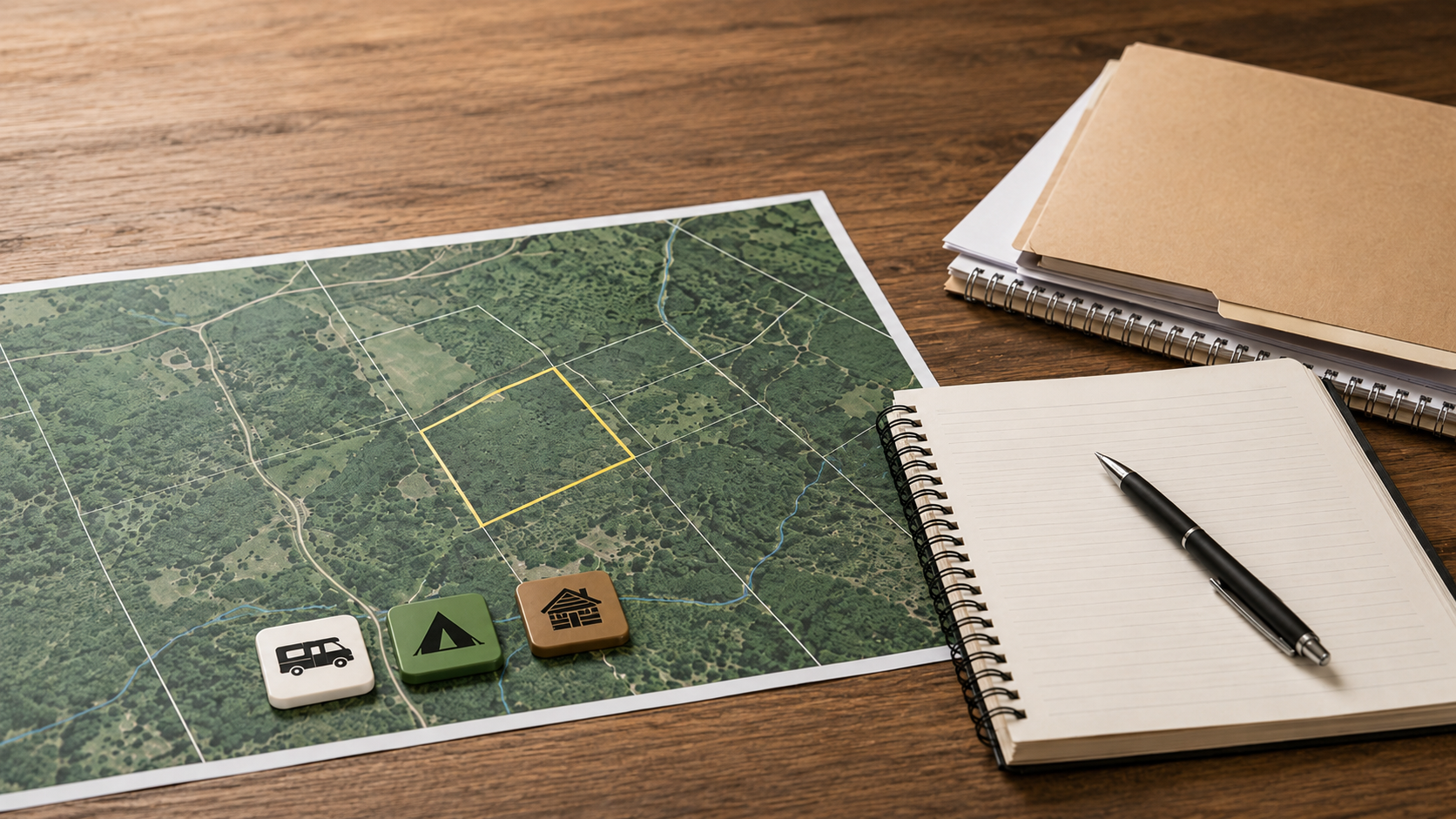
Government rules are only one layer.
Land inside a subdivision may also have recorded covenants, deed restrictions, or property owners’ association rules. These private restrictions can apply even when the county itself has few land-use requirements.
Restrictions may address:
Camping
RV parking or occupancy
Mobile and manufactured homes
Minimum home size
Cabin construction
Foundation requirements
Outbuildings and sheds
Animals
Property maintenance
Short-term rentals
Nuisances or abandoned vehicles
Do not assume that “rural” means “unrestricted.”
Also be careful with listings described as unrestricted land. That phrase may mean there are no known private subdivision restrictions, but state, county, city, sanitation, building, floodplain, or access requirements may still apply.
Ask for the actual restriction documents when available rather than relying only on a short-listing summary.
Camping and RV Use Are Separate Questions
Camping in a tent, parking an RV, and living in an RV are not necessarily treated the same way.
A property may fall into one of several situations:
Occasional tent camping is allowed.
Camping is allowed only for a limited number of days.
An RV may be stored but not occupied.
An RV may be occupied temporarily during permitted construction.
A temporary-use permit is required.
Water and approved wastewater disposal are required.
RV use is prohibited by subdivision restrictions.
Long-term or full-time RV occupancy is not allowed.
You should also ask whether rules apply differently to a travel trailer, fifth wheel, motorhome, camper van, or permanently placed recreational vehicle.
Financing terms may add another layer
When buying land with owner financing, review the purchase agreement before camping, occupying the land, or making improvements.
Some financing agreements restrict occupancy, RV placement, land clearing, building, or other major improvements until the property is paid in full.
A county saying that an activity is allowed does not override the terms of a private purchase agreement.
Building Requires More Than Calling Land “Buildable”
The word buildable can be misleading because different people use it differently.
A seller may mean that homes exist nearby. A buyer may interpret it as a guarantee that a specific house can be placed on the property immediately.
Before treating a property as a future homesite, verify:
Permitted structure types
Minimum square footage
Setbacks from roads and property lines
Lot dimensions
Legal and physical road access
Driveway requirements
Terrain and slope
Drainage and floodplain concerns
Electric service
Water options
Septic or sewer requirements
Soil suitability
Building permits
Subdivision approval requirements
A property can potentially support a home while still requiring clearing, grading, driveway work, utility extensions, soil testing, permits, or other preparation.
That does not necessarily make it a poor property. It means the buyer needs to understand the work, cost, and timeline involved.
Check Septic and Wastewater Requirements
Wastewater is especially important when planning to camp, occupy an RV, or build a residence.
An undeveloped lot usually does not have an existing bathroom or approved wastewater system. Long-term use may require a septic system, sewer connection, holding system, or another approved solution.
The Arkansas Department of Health’s Onsite Wastewater program reviews permit applications for qualifying onsite wastewater systems. Its guidance directs property owners to contact the Onsite Environmental Specialist at the county health unit for information about soil testing, system design, and the permit process.
Questions to ask include:
Has the property ever had a soil test?
Is public sewer available?
Would a septic permit be required?
Is there enough suitable space for a system?
Are there slope, soil, or drainage concerns?
What wastewater arrangement is required for RV use?
Are portable systems or holding tanks permitted?
Do not assume that an RV’s holding tank removes the need to follow sanitation and wastewater rules.
Verify Utility Availability Directly
A utility pole near the property does not guarantee that electricity can be connected easily or inexpensively.
Likewise, public water in the neighborhood does not necessarily mean there is already a meter or service line at the parcel.
Depending on your plans, contact the appropriate provider about:
Electricity
Public water
Well options
Sewer
Septic
Propane
Internet
Cellular coverage
Trash service
Ask the provider to check the exact parcel or nearest service address.
Helpful questions include:
Is service available to this property?
Where is the nearest connection point?
Would a line extension be required?
What permits, deposits, or connection fees apply?
Can the provider give a rough installation estimate?
Utilities described as nearby should be treated as a reason to investigate, not as a guarantee.
Consider Road Access and Seasonal Conditions
Even when camping or RV use is allowed, you still need to reach the property safely.
Look at both legal access and physical access.
Legal access determines whether you have a recognized right to reach the property. Physical access describes what is actually on the ground.
Ask:
Does the parcel touch a public or maintained road?
Is there a recorded easement?
Is the road paved, gravel, dirt, or unimproved?
Who maintains it?
Is it passable after heavy rain?
Is there an existing entrance or driveway?
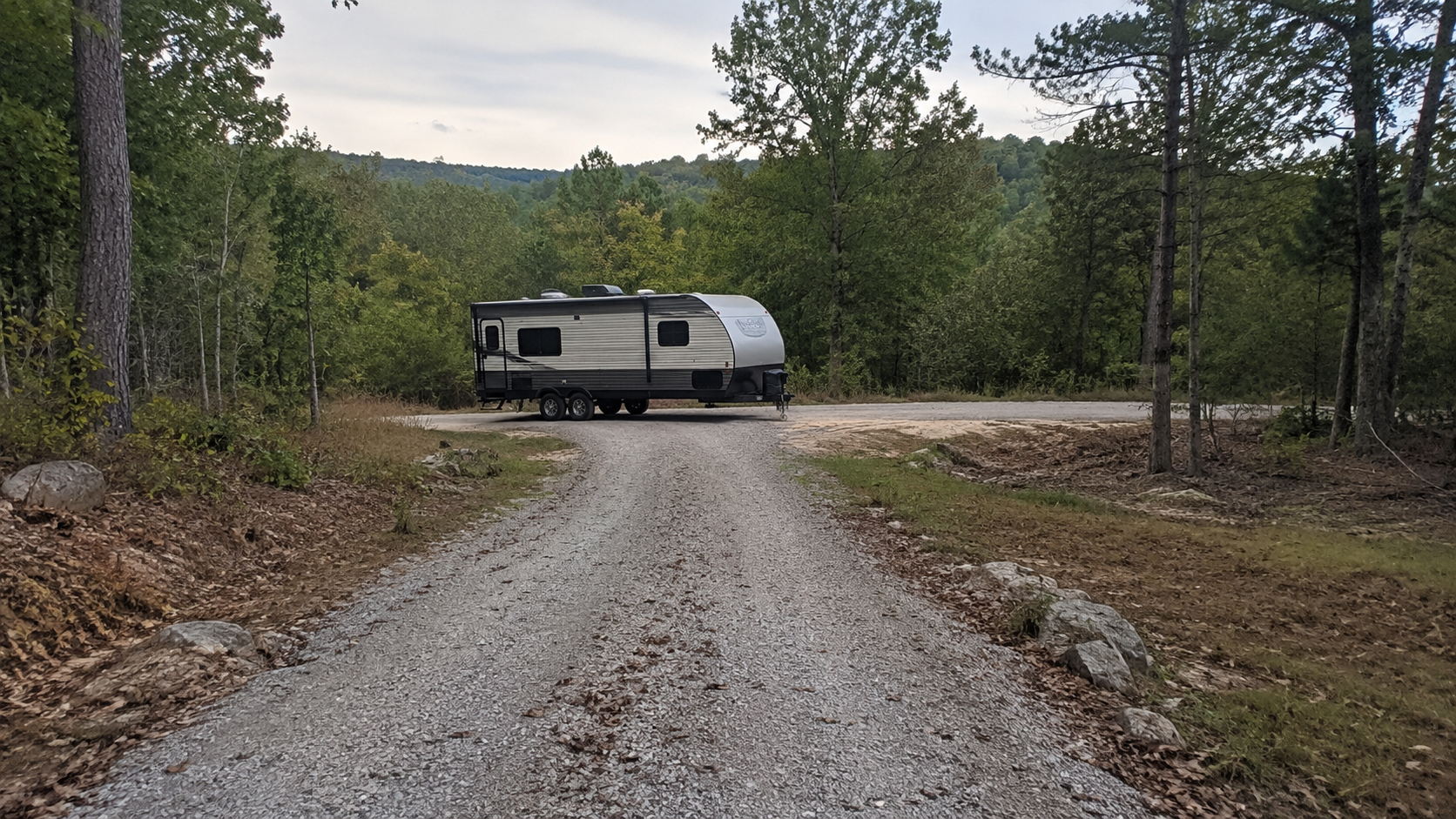
Is the road wide enough for an RV or trailer?
Are there steep grades, sharp turns, low branches, or narrow culverts?
Is there room to turn around without entering another property?
A road that works well for a car may not work as well for a large travel trailer or motorhome.
For more help evaluating access, utilities, restrictions, and terrain, read How to Tell If Rural Land Is Usable Before You Buy
Compare the Rules with Your Actual Goal
Here are four common buyer plans and the details each buyer should verify.
“I want to camp there on occasional weekends.”
Check how many days camping is permitted, whether tents are allowed, whether sanitation is required, and whether seasonal fire or burning rules apply.
“I want to park an RV there and use it while I visit.”
Verify whether the RV can be parked, whether it can be occupied, how long it may remain, and whether a temporary-use permit or approved wastewater system is required.
“I want to build a small cabin later.”
Ask about minimum home size, permitted building types, foundation requirements, setbacks, utilities, septic approval, road access, and building permits.
“I am buying the property as a long-term investment.”
You may not need immediate camping or building rights, but restrictions still affect future resale and buyer demand. Review access, taxes, community fees, restrictions, and utility options before purchasing.
Questions to Ask Before Buying Rural Land
Before you commit to a property, ask:
Is the property inside city limits or an unincorporated area?
Are there recorded subdivision or deed restrictions?
Is there a property owners’ association?
Is occasional camping allowed?
Can an RV be parked on the property?
Can the RV be occupied, and for how long?
What structures are permitted?
Are there minimum size or foundation requirements?
What permits would be required?
What wastewater or septic requirements apply?
Are electricity and water actually available to the parcel?
Does the property have documented and usable road access?
Are there financing restrictions on occupancy or improvements?
Which details still need to be independently verified?
Whenever possible, ask for documents or written confirmation from the office or organization responsible for the rule.
You can also review our Frequently Asked Questions for more information about buying land, owner financing, property use, and the purchasing process.
Verify Before You Plan
Camping, RV use, and building may all be possible on rural land, but the answer depends on the exact parcel and the exact activity.
Do not rely on a broad statement such as:
“It is rural, so there are no rules.”
“There is an RV nearby, so it must be allowed.”
“The listing says buildable.”
“Utilities are in the area.”
“It is my land, so I can do anything.”
Start with your goal. Then verify local rules, private restrictions, sanitation requirements, utilities, access, and financing terms.
At Hopson Land Investments, we want buyers to understand what is known about a property and which details may still need to be checked.
Tell us what you hope to do with the land before you buy. We can help you review the available property information and identify the questions you may need to ask next.
Browse our available Arkansas land or contact Hopson Land Investments with questions about a property.
This article is for general buyer education and is not legal, engineering, building, or permitting advice. Requirements can vary by property and may change. Buyers should verify intended uses with the appropriate government offices, associations, utility providers, and professionals before purchasing or making improvements.
FAQs
Can I camp on land I buy?
It depends on the property. County or city rules, subdivision restrictions, POA requirements, sanitation rules, and financing terms may affect whether camping is allowed and how long you can stay. Verify the rules for the exact parcel before purchasing.
Can I park or live in an RV on rural land?
Sometimes, but parking an RV and occupying it are separate issues. RV occupancy may be limited by local rules, subdivision restrictions, sanitation requirements, temporary-use permits, or financing terms.
Can I build on rural land immediately?
Not always. Building may depend on legal access, permits, setbacks, structure requirements, terrain, utilities, septic approval, subdivision restrictions, and other property-specific details.