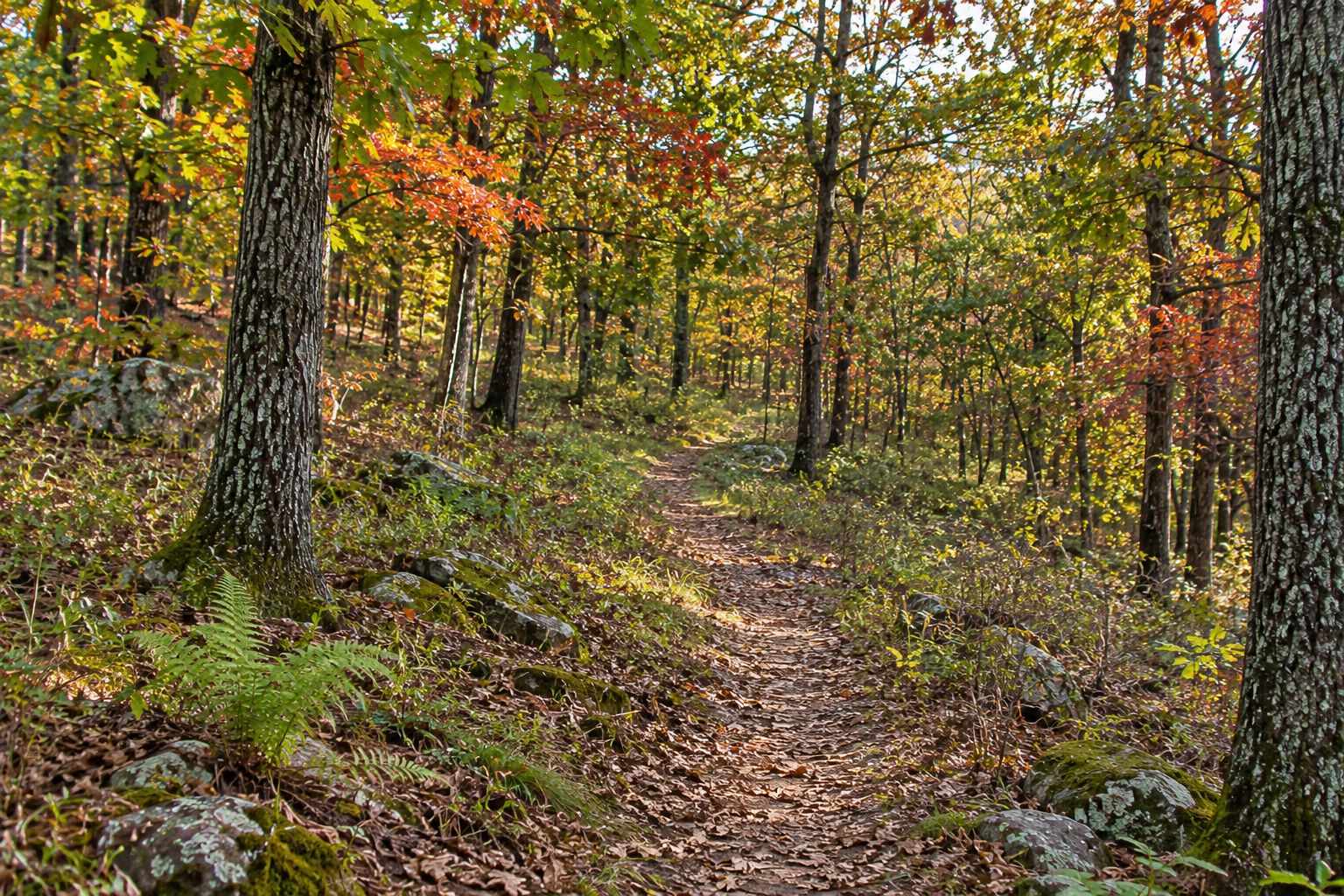
Clearing Trees and Brush on Rural Land: What to Know Before Starting
Clearing Trees and Brush on Rural Land: What to Know Before Starting
By Krysta Hopson | Hopson Land Investments
A wooded parcel can inspire big plans: opening a walking path, creating a place to enjoy the outdoors, or eventually preparing for a driveway or homesite. Before clearing rural land, though, there are several questions worth answering. A tree line does not prove a property boundary, an existing trail does not establish legal access, and removing vegetation can change how water moves across the ground.
Begin with your intended use, not a machine
What are you trying to accomplish? Removing a few invasive shrubs to maintain an existing authorized footpath is different from removing mature trees to open a building area. Creating a driveway may involve grading, drainage work, and utility planning as well as vegetation removal. Those projects can have different costs, risks, and approval requirements.
Write down the smallest area that would meet your goal. Decide what should remain, including healthy shade trees, natural screening, and vegetation that protects a slope or streambank. Our guide to what usable rural land really means explains why a parcel does not have to be fully cleared to fit a buyer's plans.
Confirm the actual property boundaries
Clearing beyond your own parcel can damage a neighbor's property and create a costly dispute. County GIS outlines, satellite imagery, fences, and informal stakes may help you orient yourself, but none should automatically be treated as a current surveyed boundary. Compare the deed's legal description with recorded plats and any existing survey. If work will approach a line, ask a licensed surveyor whether additional field verification or marking is appropriate.
Do not cut a tree merely because it appears to be on your side of a fence. Trees near a line can raise additional ownership and legal questions. For a fuller explanation, see how to verify rural land boundaries before you buy. Confirm that contractors understand the verified work area before they mobilize.
Check access and written restrictions first
A truck or forestry machine needs a lawful route onto the land, enough room to operate, and a plan for getting material out. A visible road or track is not necessarily public or covered by an easement. Verify recorded access rights, gate arrangements, road conditions, and any restrictions on heavy equipment. Ask who is responsible for damage to a shared or private road.
Next, review the recorded deed restrictions, subdivision covenants, property owners' association rules, and applicable city or county requirements. Some locations may regulate tree removal, grading, stormwater, road entrances, burning, or work near protected features. Rules differ by parcel and jurisdiction. Contact the responsible local offices and obtain the relevant documents rather than relying on a general statement that rural land has no restrictions.
Owner-financing reminder: If you are buying through owner financing, read your specific purchase agreement before clearing trees or brush, grading, placing equipment, or making improvements. Hopson Land Investments financing agreements may restrict improvements until payoff. Do not assume that making payments gives permission to change the property. Ask for clarification and written authorization when required by your agreement.
Separate brush removal, tree clearing, and grading
These terms are often used together, but they describe different scopes of work. Brush removal may focus on smaller woody growth and undergrowth while leaving mature trees and most of the soil surface in place. Tree clearing may include cutting larger trees, handling logs and debris, and possibly removing stumps. Grading deliberately changes ground elevation or shape, often to establish a road, pad, or drainage feature.
Ask each contractor exactly what their quote includes. Will they mulch vegetation in place, haul it away, leave logs, remove stumps, or disturb the soil? Will they drive across wet ground or slopes? Even a selective clearing plan should protect desired trees and avoid unnecessary damage to roots.
Understand slopes, runoff, and exposed soil
Trees, roots, understory plants, and leaf litter help protect soil. Removing that cover can leave the surface more vulnerable to rainfall, runoff, and erosion, particularly on Ozark hillsides. The USDA Natural Resources Conservation Service explains that exposed forest soils are vulnerable to erosion and that roots and forest-floor cover support soil stability. See its forest soil health guidance for background.
Look for gullies, low spots, drainage channels, seasonal wet areas, and water that appears to cross the parcel after storms. Think about what lies downhill, including neighboring land and roads. A contractor or qualified site professional can help evaluate whether the proposed method will disturb soil, redirect water, or require erosion-control measures. Avoid treating clearing as proof that a site is suitable for a building or driveway; that takes a separate evaluation.
It may be sensible to keep vegetation along steep slopes and drainage features until a site-specific plan is developed. Ask what measures will stabilize disturbed areas and how the work area will be left after rain.
Pay attention to streams, wetlands, and sensitive areas
Wet ground, intermittent drainage paths, creeks, and wetlands deserve special care. Federal Clean Water Act Section 404 permitting may apply when a project discharges dredged or fill material into jurisdictional waters, including certain wetlands. That does not mean every instance of cutting brush requires a federal permit, and there are specific exemptions. The applicability depends on the activity and site. Review the EPA's Section 404 overview and ask the appropriate U.S. Army Corps of Engineers district or environmental professional when regulated waters may be involved.
Local stormwater, floodplain, tree-protection, habitat, or other requirements may also apply. Do not assume that a wet area is unregulated because it dries out during part of the year. If you see a creek bed, spring, standing water, or unusual vegetation, pause and obtain qualified guidance before moving soil or filling an area.
Plan around underground utilities and equipment safety
Before stump removal, trenching, digging, or other excavation, use the applicable 811 utility-notification process and allow the required time for locating underground facilities. The U.S. Department of Transportation's 811 safety guidance explains why notification matters. Ask about private service lines as well, since not every privately installed line is necessarily included in a standard utility locate.
Tree work and heavy equipment create serious hazards, especially on steep, rocky, or wooded terrain. Consider professional help rather than attempting dangerous cutting or equipment operation without training. Discuss access routes, overhead lines, nearby structures or roads, weather limitations, emergency access, and who will supervise the site. A written scope helps prevent a crew from clearing more than you intended.
Compare contractor proposals on the same scope
Costs vary with acreage, tree diameter and density, slope, rock, wet ground, access, equipment needs, debris handling, and how much soil is disturbed. Clarify whether the price is fixed or estimated, what happens if hidden obstacles are found, and whether follow-up stabilization or cleanup is included.
Request proof of relevant insurance and ask about licensing or registration requirements for the work and location. Confirm who handles permits, utility locates, disposal, and any needed traffic or road arrangements. Ask for a written plan that identifies protected trees and no-go areas.
A practical pre-clearing checklist
Define the intended use and the smallest area that truly needs work.
Match the legal description, plat, and survey information to the exact parcel.
Verify legal access and permission to bring equipment onto the site.
Read deed, subdivision, association, local, and owner-financing restrictions.
Identify slopes, drainage paths, wet areas, and vegetation worth preserving.
Ask the proper authorities whether the proposed work requires permits or review.
Arrange utility locates before excavation and plan for equipment safety.
Get a written contractor scope covering debris, soil disturbance, and cleanup.
Allow for possible erosion-control work and unexpected site conditions.
Frequently asked questions
Can I clear trees immediately after buying vacant land?
Not automatically. First confirm that the proposed work is on your parcel, permitted under applicable local and recorded restrictions, and allowed by your purchase or financing agreement. Some projects need additional review or professional planning, especially near boundaries, slopes, or water features.
What is the difference between brush clearing and grading?
Brush clearing generally removes vegetation; grading changes the shape or elevation of the ground. Tree clearing can include stump removal and soil disturbance, so ask a contractor to describe the exact methods. The distinction matters for cost, runoff, safety, and potential approvals.
Who should I ask about restrictions before clearing?
Start with the seller and the recorded property documents. Then contact the relevant city or county office, association if any, and your financing provider. A surveyor can help with boundary questions; an environmental or site professional and appropriate agencies can advise on sensitive areas or drainage. Ask a qualified contractor about the proposed work methods and safety.
Make the plan fit the property
Clearing rural land is not simply a matter of removing everything in sight. A thoughtful approach begins with the intended use, verified boundaries, documented access, applicable restrictions, water and soil conditions, and realistic project costs. Sometimes selective work is enough; sometimes the right decision is to leave an area undisturbed until more facts are available. For a broader starting point, review our vacant-land buying checklist before making a commitment.