Hunting and Wildlife on Vacant Land: Questions Buyers Should Ask
By Krysta Hopson | Hopson Land Investments
A wooded rural lot may look promising for hunting, wildlife watching, or simply enjoying nature. But seeing deer tracks in a listing photo is not proof that hunting is allowed, safe, or practical on that particular parcel. Buying land gives you ownership rights, not an exemption from wildlife laws, recorded restrictions, access limits, or safety responsibilities. Before you buy, separate what the land looks like from what you have verified. This guide focuses on the questions worth asking, especially for rural property in Arkansas and the Ozarks.
Wildlife sightings are not a guarantee
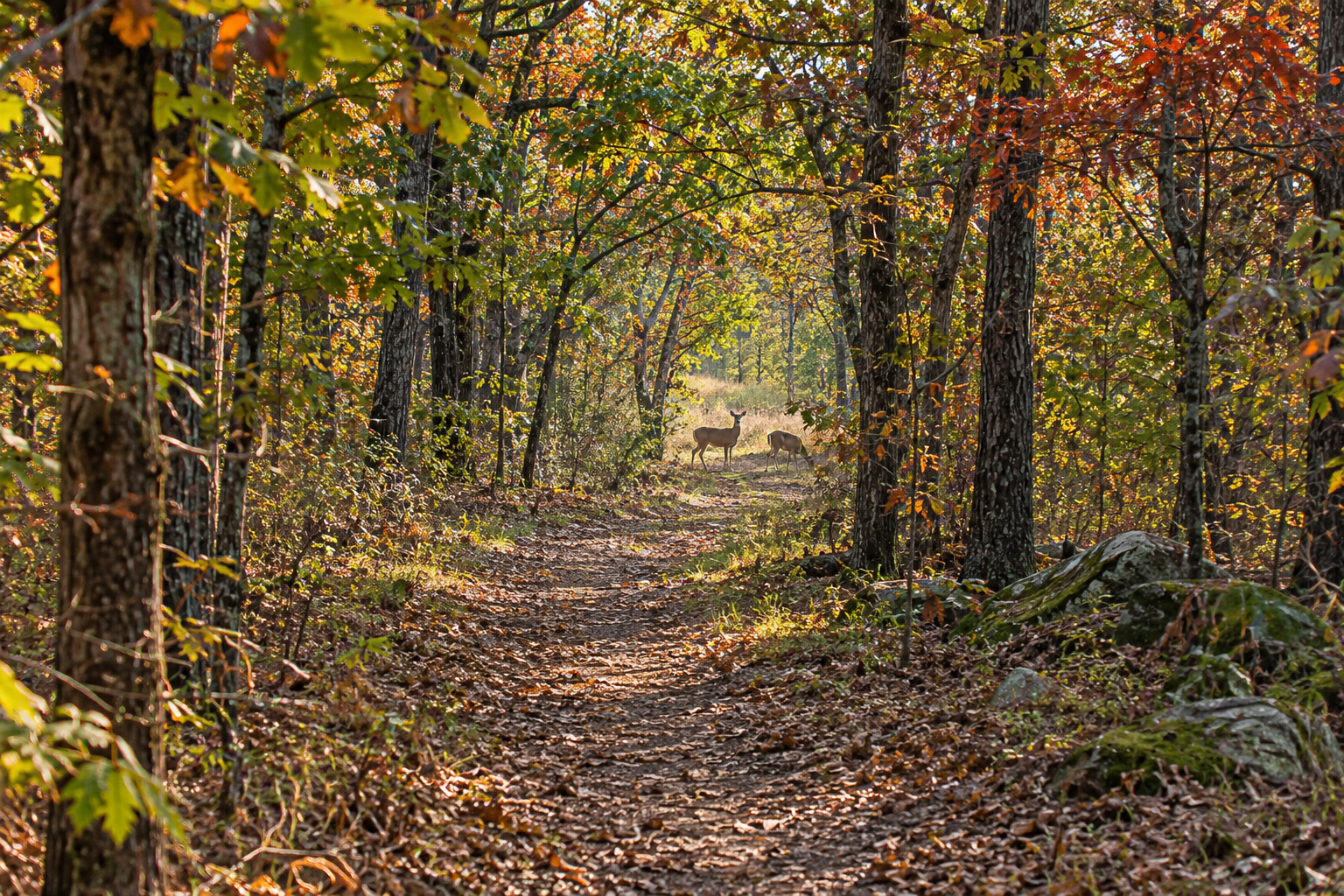
A trail camera photo, a rub on a tree, or a deer seen near the road tells you an animal was present at one moment. It does not establish a resident population, predictable movement, or the quality of hunting during a particular season. Wildlife responds to food, water, weather, habitat changes, hunting pressure, and neighboring land use. A parcel may be a useful place to observe birds or deer without being a suitable hunting location.
Ask when photographs were taken, whether they depict the actual parcel, and whether a seller has permission to share them. Do not treat photos from a nearby property as evidence about the lot for sale. Visit when access is authorized, note habitat and obvious human activity, and avoid promising yourself a particular species or harvest.
Ownership and hunting permission are different questions
A buyer should confirm the seller actually owns the parcel being offered, where its boundaries lie, and how it can legally be accessed. A road on a map is not necessarily a public road, and a path across a neighbor's property is not automatically a legal easement. Review the deed, recorded easements, plat, and title information with qualified local help when needed. For more detail, read our guide to verifying rural land boundaries. Never assume you can cross someone else's land to reach a hunting area.
Ownership also does not mean every activity is permitted. Recorded subdivision covenants, association rules, local ordinances, and lease or financing agreements can affect how land may be used. Ask specifically whether hunting, discharge of firearms, temporary blinds, tree stands, camping, and vehicle access are restricted. Obtain the current written documents rather than relying on a casual description of the neighborhood.
Check current state hunting rules before planning a trip
Hunting requirements vary by state, species, season, method, age, and location. In Arkansas, start with the Arkansas Game and Fish Commission's current hunting regulations and license information. A person who owns private land may still need an appropriate license, must follow applicable seasons and bag limits, and may face special rules for certain areas or species. Do not rely on last year's rules or a social-media summary.
If the property is in Oklahoma or Missouri, use the respective state wildlife agency rather than applying Arkansas rules across a state line. Confirm legal methods, required permits or tags, hunter education rules, and any restrictions related to baiting or wildlife management. For a planned activity, check the rules again shortly before the season. This article is buyer education, not a substitute for the agency's current regulations.
Parcel size, shape, and surroundings matter
A small lot surrounded by homes or other subdivision parcels may have woods and wildlife but still be an unsuitable place to hunt. Our guide to evaluating usable rural land explains why suitability depends on your intended use. The distance to occupied structures, roads, trails, neighboring boundaries, and areas where people gather matters. So does the direction in which a shot could travel and what lies beyond the visible trees. Do not assume a wooded backdrop is a safe backstop.
Official references: Arkansas Game and Fish Commission hunting information; Oklahoma Department of Wildlife Conservation; Missouri Department of Conservation. Consult the current regulations for the state where the parcel is located.
Look at the parcel's dimensions and topography, not just total acreage. A long, narrow lot can create different practical limitations from a compact tract of the same size. Slopes, drainage, thick brush, and steep access may affect safe movement and visibility. An aerial map can help you prepare questions, but only an authorized site visit and reliable boundary information can clarify conditions on the ground.
Ask whether adjacent land is actively farmed, developed, posted against trespass, or open to public recreation. The answers may change over time. Respect property lines, do not place stands or equipment across them, and seek permission before entering neighboring property for any reason.
Check for recorded and local restrictions
Before making hunting part of your purchase decision, request the recorded plat, deed restrictions, covenants, and any association or improvement-district rules. Some communities restrict discharge of weapons or other activities even when a parcel is vacant. County and municipal requirements can also matter. The exact documents and governing jurisdiction control; one Ozark subdivision's rules should never be assumed to apply to another.
If the lot is subject to owner financing, review the purchase agreement before installing blinds, cutting shooting lanes, clearing trees, placing structures, or making other improvements. Some agreements prohibit improvements until the property is paid off or require prior permission. Verify the terms of your specific contract and obtain written authorization when required. See how owner financing works when buying land for additional context.
Distinguish habitat observations from land-management plans
Wildlife watching may require little more than quiet visits and careful observation. Habitat work can be a different undertaking. Clearing brush, planting food plots, installing fencing, creating water features, or grading access can change drainage, erosion, and neighboring conditions. Those activities may trigger restrictions or approvals, and they can cost more than expected.
If habitat management is central to your plans, talk with a qualified wildlife professional or the relevant state agency about the site's conditions. Ask what is appropriate for the soil, terrain, existing vegetation, and species you hope to support. Do not start work simply because a seller describes the lot as 'great hunting land.' A practical plan should be grounded in what the property can support and what you are legally allowed to do.
Plan for access, safety, and neighboring owners
Consider how you would enter and leave the property during wet weather or low light. An unimproved road may be passable in summer but difficult after heavy rain. Confirm legal access, any gate arrangements, road maintenance responsibilities, and whether vehicles may be parked or driven where you intend. If a property is remote, tell someone your plans and prepare for limited phone reception.
Good relationships with neighbors are valuable, but a friendly conversation is not a substitute for legal permission. Ask respectful questions about property lines, shared roads, and nearby activities. Avoid assumptions about where other people might be walking or working. Always prioritize safety and the applicable hunting regulations over convenience.
A buyer’s practical verification checklist
- Confirm the exact parcel number, legal description, and recorded ownership.
- Verify legal and physical access, including any private roads or easements.
- Obtain current covenants, association rules, and applicable local restrictions.
- Check the current state wildlife agency's license, season, method, and species rules.
- Review parcel shape, boundaries, neighboring uses, and obvious safety limitations.
- Visit with permission; document what you actually observe without assuming wildlife is guaranteed.
- Estimate the costs and permissions involved in any desired habitat or access work.
- If buying with owner financing, check the agreement before clearing or improving the land.
Frequently asked questions
Can I hunt on land I own without a license?
Not necessarily. Landownership alone does not establish a blanket exemption. Requirements depend on the state, your circumstances, species, and season. Check the current rules directly with the state wildlife agency before hunting.
Does wooded land guarantee good hunting?
No. Trees can provide habitat, but wildlife presence and hunting opportunities depend on many changing factors. Photos, tracks, and neighbor reports are clues rather than guarantees.
How do I check whether hunting is restricted on a parcel?
Start with recorded deeds and covenants, the subdivision or association documents, and the relevant local government. Then verify state hunting regulations. If language is unclear, ask an appropriate local professional rather than guessing.
Choose land that fits your actual plans
A rural property can be enjoyable for wildlife watching, quiet visits, or other permitted recreation even if hunting is not a good fit. The useful question is not simply 'Are there deer here?' but 'Can I safely and lawfully use this exact parcel the way I intend?' Clear answers before purchase are worth more than an appealing photo or a broad promise.