Why Cheap Land Is Not Always the Best Land
Finding an inexpensive piece of rural land can feel like a great opportunity.
A low price may make land ownership possible sooner. It may allow you to avoid a large loan, keep your monthly payment manageable, or purchase property for recreation, investment, or future plans.
Affordable land is not automatically bad land. In fact, the right lower-priced property can be a smart purchase.
The problem comes when price becomes the only thing you compare.
A property may be inexpensive because of its size, location, terrain, access, restrictions, utility situation, or current market demand. None of those things necessarily make it a poor property. But they can affect whether the land will work for what you actually want to do.
Before choosing the cheapest lot you can find, take time to understand what you are getting—and what may be required after you buy it.
Affordable Land Can Be a Good Opportunity
Many buyers are drawn to rural land because it can be more affordable than buying a house or developed property.
Affordable vacant land may offer:
A lower entry point into property ownership
A place to hold for future plans
Recreational or weekend-use possibilities
More privacy than a traditional neighborhood
The opportunity to build later
A long-term investment
Flexible owner-financing options
There is nothing wrong with starting your search with a budget. Your budget matters, and a responsible purchase should fit comfortably within it.
However, the purchase price is only one part of the decision.
A better question is:
What will this property realistically cost me—in money, time, and effort—to use it the way I intend?
That question gives you a much clearer picture of value.
Why Price Alone Can Mislead Buyers
Online land listings make it easy to sort properties from lowest price to highest price. That can be useful, but it can also encourage buyers to compare properties that are not truly similar.
For example, two rural lots may both be listed as half-acre properties. One may have maintained road access, nearby electric service, a manageable slope, and clearly documented restrictions.
The other may be less expensive but located on an unimproved road, have difficult terrain, or require more research before the buyer knows whether it fits their plans.
The lower-priced property may still be a good purchase for the right person. A buyer looking for a long-term investment may be comfortable holding land that is not immediately ready to use.
But a buyer hoping to build, camp, visit regularly, or make improvements soon may decide that the higher-priced property offers better overall value.
This is why it helps to understand the difference between cheap land and land that is affordable for your intended use.
Access Problems Can Make Land Harder to Use
Access is one of the first things to review when comparing rural properties.
A lot may appear close to a road on a map, but you still need to understand whether you have both legal and practical access.
Ask questions such as:
Does the property touch a public or private road?
Is there documented legal access?
Is the road maintained?
Is it paved, gravel, dirt, or unimproved?
Can a normal vehicle reach the property?
Are there seasonal road conditions?
Is there a visible entrance or driveway area?
Would clearing, grading, or a culvert be needed?
A lower purchase price may not feel like a bargain if you later discover that reaching the property requires significant road or driveway work.
That does not mean every property needs paved access. Some buyers are comfortable with a more remote lot or an unimproved road. What matters is knowing the situation before buying and deciding whether it matches your plans.
For a broader review of access, utilities, terrain, and property fit, read How to Tell If Rural Land Is Actually Usable Before You Buy.
Restrictions Can Limit Your Plans
Rural land may feel open and unrestricted, but ownership does not always mean you can use the property in any way you choose.
Depending on the location, rules may come from:
A city or county
A subdivision
A property owners association
Recorded deed restrictions
A Bill of Assurance
Health or sanitation requirements
The terms of an owner-financing agreement
Restrictions may affect:
Camping
RV use
Mobile or manufactured homes
Tiny homes
Minimum building sizes
Short-term rentals
Livestock
Storage buildings
Property maintenance
Setbacks and permits
Imagine finding an inexpensive wooded lot because you want a place to park an RV on weekends. If the subdivision does not allow that use, the property may not be a good value for you—regardless of how low the price is.
Another buyer who wants to hold the property as a long-term investment may view the same lot differently.
The land is not necessarily good or bad. The question is whether the rules fit your intended use.
Always verify important use restrictions with the appropriate city, county, subdivision, POA, or other governing source before relying on a particular plan.
Utilities and Terrain Affect the Real Cost
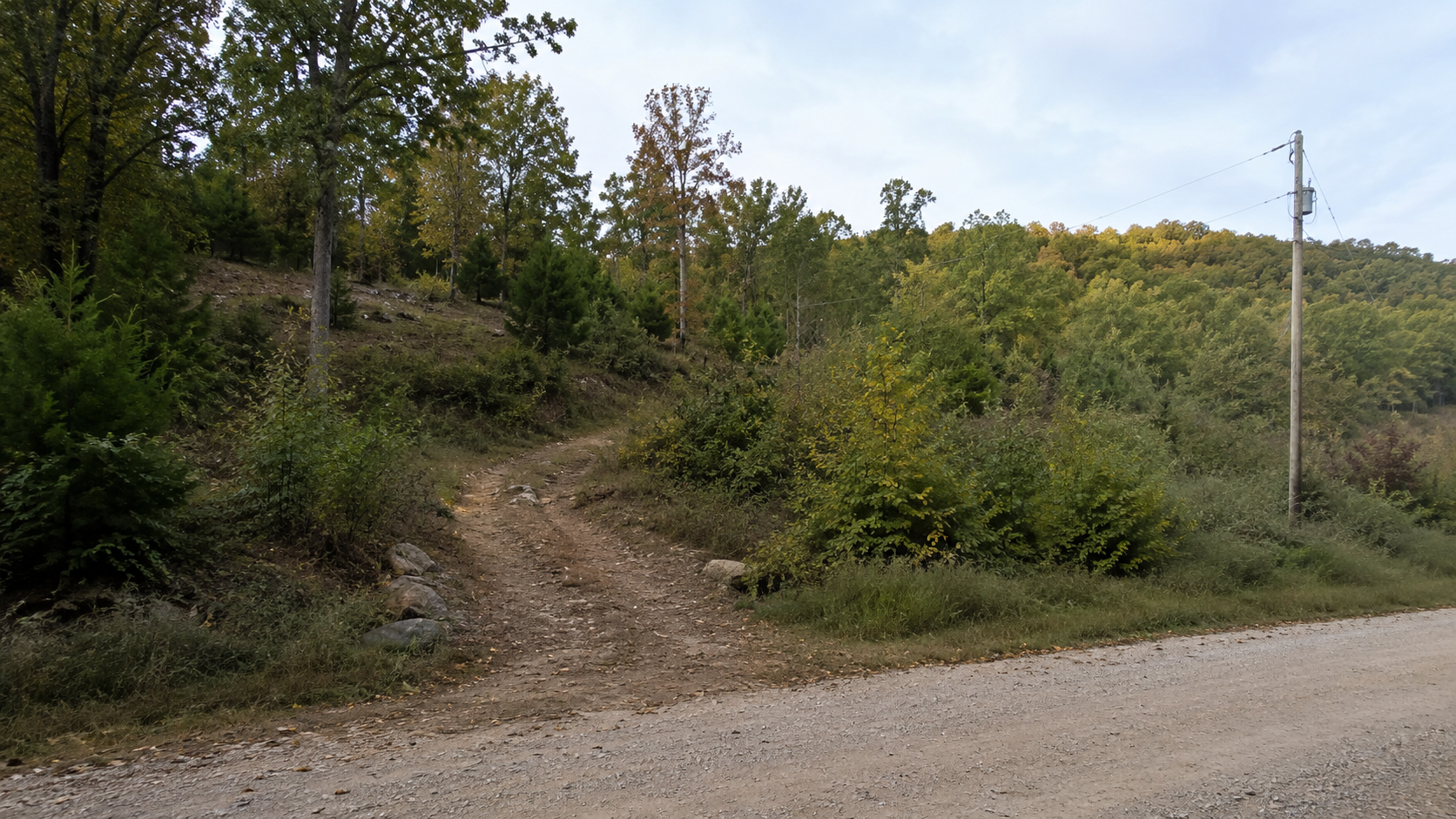
Utilities are another area where buyers can underestimate the difference between purchase price and total cost.
Before buying, consider:
Whether electric service is nearby
Whether public or community water is available
Whether a well would be needed
Whether sewer service is available
Whether the property would require a septic system
Whether internet or reliable cell service matters to you
How far utilities may need to be extended
A power pole near the property does not necessarily mean the connection will be simple or inexpensive. Utility providers should be contacted directly when service availability or connection cost is important to your decision.
Terrain can also change the real cost of using a property.
A steep, rocky, heavily wooded, or low-lying lot may require additional work for:
A driveway
Clearing
Grading
Drainage
A building pad
Septic installation
Utility lines
Safe vehicle access
A more expensive property with easier terrain may require less work before it can support your plans.
At the same time, a sloped or wooded property may be completely acceptable for someone who values privacy and does not plan to build soon.
Once again, the best choice depends on what you expect the land to do for you.
Do Not Forget Taxes and Ongoing Fees
The advertised purchase price is not always the only ongoing cost of owning land.
Before buying, ask about:
Annual property taxes
POA or association dues
Road-maintenance costs
Improvement-district charges
Parks or community fees
Special assessments
Owner-financing servicing fees
Property-maintenance requirements
Individually, these costs may be manageable. But they should still be included when comparing two properties.
A property that costs less upfront but has higher annual fees may not be the lowest-cost option over several years.
This does not mean you should automatically avoid properties with dues or community fees. Those fees may support roads, amenities, maintenance, or other services. The important thing is to understand them before you commit.
Owner Financing Can Help, but Fit Still Matters
Owner financing can make affordable rural land easier to purchase without using a traditional bank loan.
Instead of paying the entire purchase price upfront, the buyer generally makes a down payment and then pays the remaining balance according to the agreed terms.
At Hopson Land Investments, many available properties are offered with straightforward 0% owner financing. Property-specific terms, monthly fees, taxes, and other costs are disclosed with each listing and purchase agreement.
Owner financing can make the payment structure more manageable, but it does not replace property research.
Before signing any agreement, review:
The total purchase price
The down payment
The document fee
The monthly principal payment
Any monthly note, tax, POA, or community fees
The length of the agreement
When the deed will be transferred
Whether early payoff is allowed
What uses or improvements are permitted during financing
What happens if payments are missed
You can learn more in How Owner Financing Works When Buying Land.
Financing should help you purchase a property that fits your goals—not convince you to purchase land that does not.
How to Compare Land Beyond the Price Tag
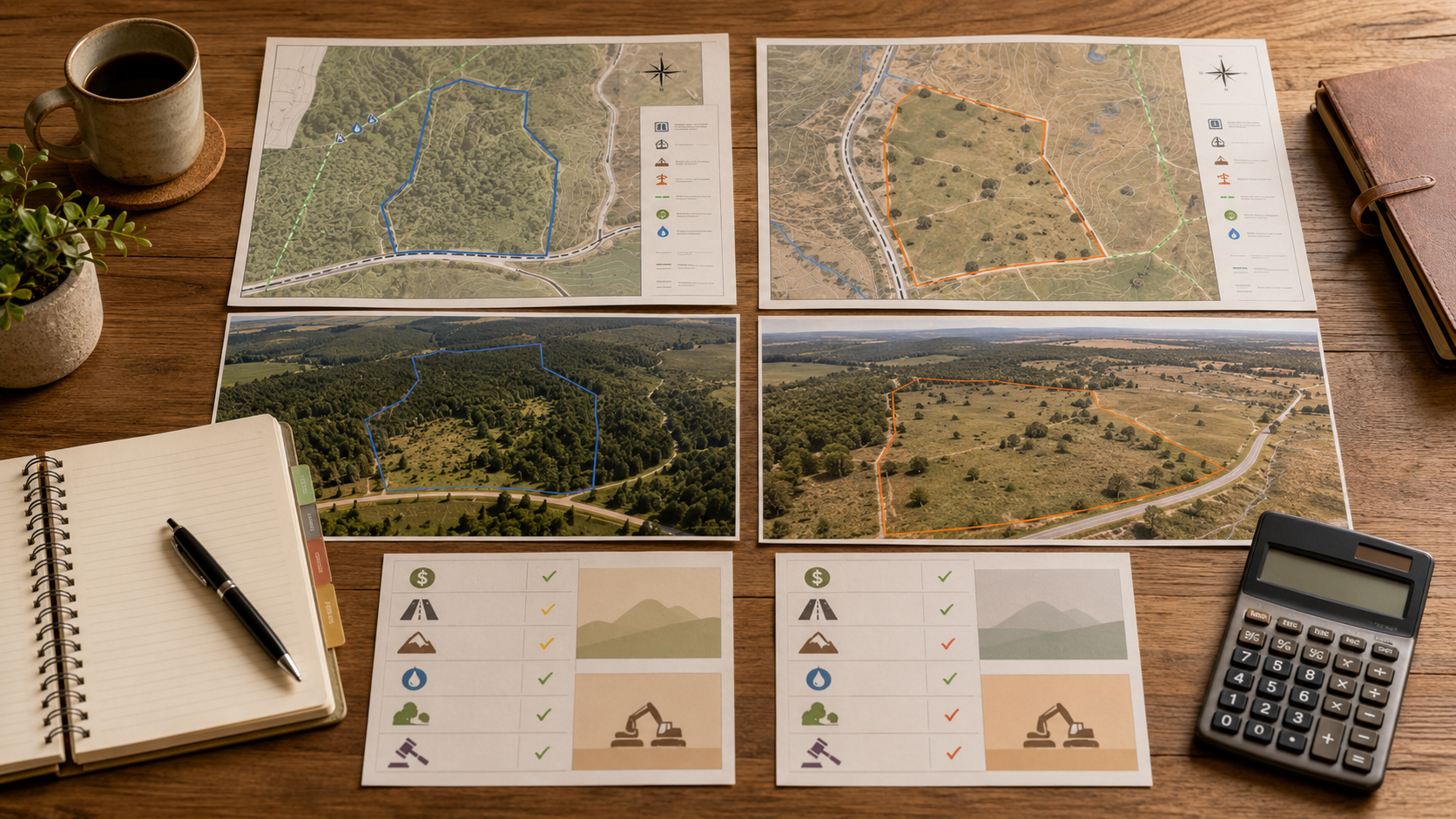
When comparing properties, put the details beside each other rather than looking at price alone.
This comparison may show that the less expensive property is still the better fit.
It may also show that spending a little more upfront could reduce future work, uncertainty, or expense.
Neither outcome is automatically right or wrong. The goal is simply to make the decision with a clearer understanding of the property.
Watch for Rural Land Red Flags
A low price should encourage careful questions, not immediate fear.
However, slow down when:
Access is unclear or only verbal
The seller avoids questions about restrictions
Property boundaries are difficult to identify
The listing makes broad promises about building or camping
Taxes or fees are not explained
Utility availability is assumed but not verified
The photos do not clearly show the road or terrain
You are pressured to buy immediately
The financing terms are confusing or incomplete
The property does not support your intended use
Not every unanswered question is a dealbreaker. Sometimes information simply needs to be gathered from the county, city, utility provider, POA, or another appropriate source.
The red flag is not always the property itself. It may be the pressure to purchase before you understand it.
The Best Land Is the Land That Fits Your Purpose
The lowest-priced property may be the right choice for you.
It may fit your budget, timeline, intended use, and comfort level perfectly. If it does, affordable land can be a meaningful opportunity.
But the cheapest land is not automatically the best land.
The better value is usually the property that gives you the clearest, most realistic path toward your goal.
Before buying, look beyond the price and ask:
Can I reach the property?
Can I use it the way I intend?
Do I understand the restrictions?
Does the terrain work for my plan?
Have I reviewed utilities and possible connection needs?
Do I understand the ongoing costs?
Are the financing terms clear?
Am I comfortable with the property as it exists today?
When those answers line up with your plans and budget, you are in a much better position to make a confident decision.
Final Thoughts
Affordable rural land can be a good opportunity, but a low price is only one part of the picture.
Access, restrictions, utilities, terrain, taxes, fees, financing terms, and intended use all affect the real value of a property.
Take time to compare the full picture before deciding. The best land is not necessarily the cheapest or most expensive property. It is the one that realistically fits what you hope to do.
You can browse available land from Hopson Land Investments and review the known property details, financing information, and available due-diligence documents.
Properties purchased through qualifying financing terms may also be covered by the Hopson Land Investments 60-Day Money-Back Guarantee. Review the guarantee and purchase terms carefully so you understand how they apply to a specific property.
Have questions about access, restrictions, utilities, financing, or whether a property seems to fit your plans? Reach out before buying. We would rather help you ask the right questions than rush you into the wrong property.
Frequently Asked Questions
Is cheap land a bad investment?
Not necessarily. Cheap land can be a good purchase when the buyer understands the property, accepts its limitations, and confirms that it fits the intended use. Price alone does not determine whether land is a good investment.
Why is some rural land inexpensive?
Rural land may be inexpensive because of its size, location, terrain, access, restrictions, available utilities, local demand, or the seller’s pricing strategy. Buyers should research the individual property rather than making assumptions based only on price.
What should I check before buying cheap land?
Review legal and physical access, restrictions, utility availability, terrain, taxes, ongoing fees, title information, financing terms, and whether the property fits your intended use.
Is owner-financed land more expensive?
It depends on the property and the specific agreement. Compare the total purchase price, interest rate, document fees, monthly servicing charges, taxes, association fees, and payment term. At Hopson Land Investments, many properties are offered with 0% interest, but buyers should still review all property-specific costs and terms.
Should I choose a larger property because it costs less per acre?
Not automatically. A smaller lot with better access, easier terrain, nearby utilities, or fewer limitations may fit your plans better than a larger property. Compare usability and total cost—not acreage alone.
Blog Setup Information
SEO Title: Why Cheap Land Is Not Always the Best Land
Meta Description: Cheap land can be a good fit, but buyers should look beyond price and review access, restrictions, utilities, terrain, and total cost.
URL Slug: why-cheap-land-is-not-always-best
Category: Buyer Education
Tags: Cheap Land, Affordable Land, Rural Land, Owner Financing, Property Fit, Land Due Diligence
Primary Keyword: cheap land
Supporting Keywords: affordable land, owner-financed land, rural land red flags, rural land value
Featured Image Alt Text: Buyer comparing affordable rural land properties based on price, access, utilities, restrictions, and property fit.
Featured Image Prompt: Create a realistic horizontal blog cover image showing a buyer-friendly comparison of two rural Arkansas or Ozark properties. One property appears less expensive but has rougher access and more difficult terrain, while the other has clearer gravel-road access and a more usable open area. Present the comparison naturally rather than as a split-screen advertisement. Calm daylight, muted rural colors, practical and trustworthy mood. Leave clean space for a title overlay. No people, logos, readable signs, price tags, or text.
Body Image Prompt: Create a realistic horizontal tabletop image showing two rural property maps being compared beside a notebook, pen, calculator, and simple property information sheets. Include subtle visual cues for price, road access, utility availability, terrain, restrictions, and annual costs, but no readable text. Warm neutral lighting, clean professional composition, practical buyer-research feel, no people or logos.